
How to Choose Realistic Edible Sugar Flowers for Stunning Wedding Cake Photos

Table of Contents
Why Sugar Flowers Matter for Your Wedding Cake Photos
Your wedding cake will appear in more photographs than almost any other element of the day. It sits at the center of the dessert table, gets cut in front of your guests, and often becomes a focal point in candid and posed portraits alike. Sugar flowers are the detail that tends to make those images feel rich and intentional rather than flat.
In photos, sugar flowers add depth, texture, and a sense of craftsmanship that buttercream alone can rarely achieve. Light catches the edges of each petal, and the shadows between layers give the arrangement dimension. Couples often find that the flowers become the part of the cake people remember most clearly afterward.
If you are planning for photography, think about the cake as part of the visual story. Ask yourself:
Will the cake sit near a window or under warm venue lighting?
Do you want close-up detail shots of the florals, or wider compositions that include the cake and guests?
Is your color palette soft and romantic, or bold and contemporary?
Answering these early helps you decide how dense and dimensional your florals should be.
What Makes an Edible Sugar Flower Look Realistic
Realism in sugar flowers comes from observation. Real petals are rarely uniform. They have slight ruffles, subtle color gradients toward the center, visible veining, and edges that curl or soften as they open. When we shape our florals, we study how actual blooms behave, then translate those irregularities into sugar.
Several qualities separate convincing sugar flowers from obviously decorative ones:
Irregular petal shapes: No two petals should be identical.
Layered color: Natural flowers shift tone from the base to the tip. Painting in gradients, rather than applying a single flat shade, creates that effect.
Believable stems and foliage: Wired stems and leaves in varied greens help the arrangement look grown rather than assembled.
Scale that matches the cake: Flowers that are too large or too small for the tiers can read as artificial.
A practical test: look at the flower from arm's length, then up close. A realistic sugar flower should hold up at both distances.
Choosing Flower Varieties That Complement Your Color Palette
Not every flower suits every palette. Choosing varieties starts with the colors already in your wedding, including bridesmaid dresses, stationery, linens, and florals at the venue. The cake should feel like part of that world, not a separate design.
Some general guidance we often share with couples:
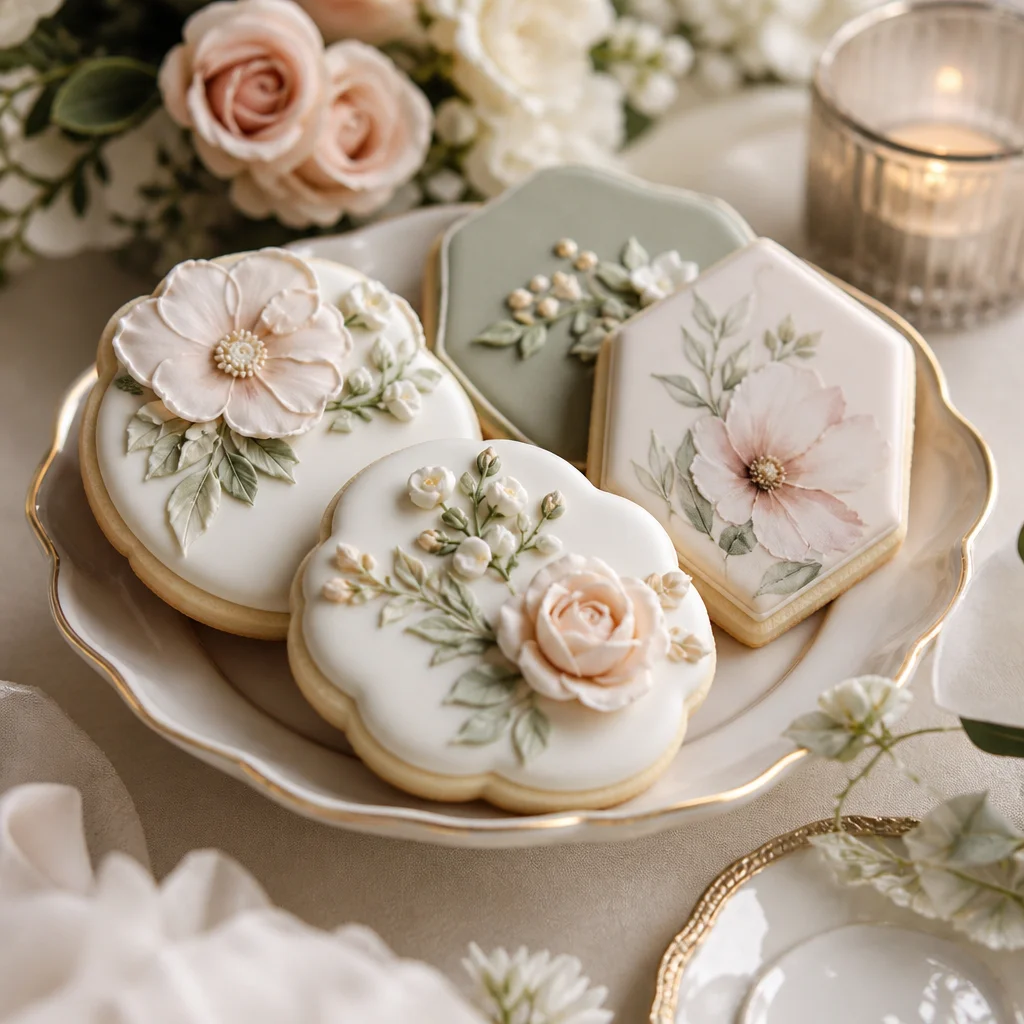
Soft blush and ivory palettes pair well with garden roses, peonies, and ranunculus, which carry gentle, layered petals.
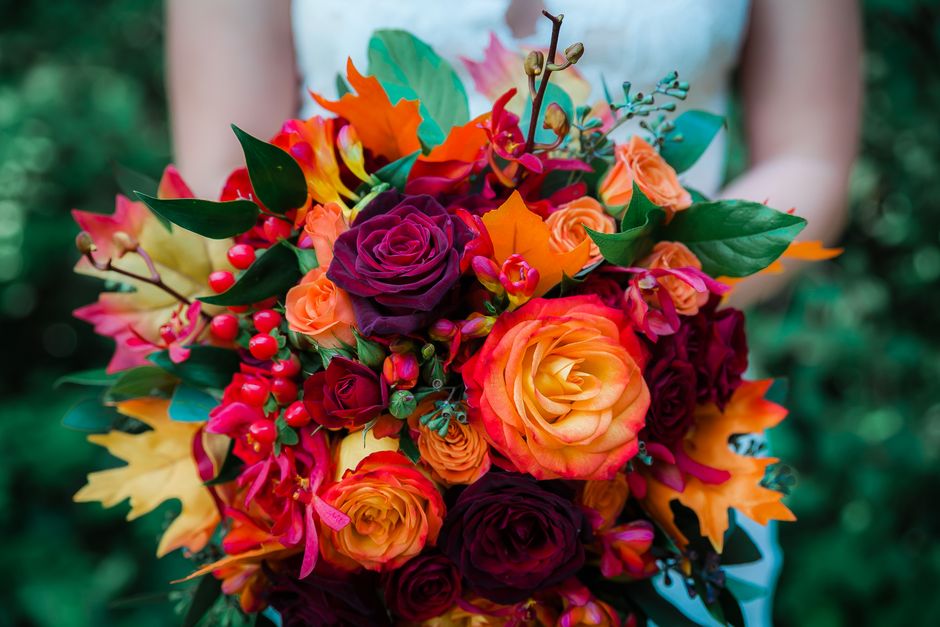
Deep plum, burgundy, or berry palettes work beautifully with dahlias or deeper rose varieties that show darker tones.
Lavender, sage, and white create a calm, airy look, often suited to sweet peas, delphinium, or small clusters of stephanotis.
Bold modern palettes can feature a single statement bloom, such as an oversized anemone, rather than a crowded arrangement.
Consider limiting your florals to three or four varieties. A cohesive selection reads as intentional, while too many shapes can compete for attention in photos.
Evaluating Petal Texture, Dimension, and Finish
Texture is where sugar flowers move from pretty to convincing. A smooth, uniform petal looks like candy. A petal with a slight softness at the edge, a subtle vein, or a matte finish looks like something that could have grown in a garden.
When evaluating florals for your cake, look at three things:
Texture: Run your eye along the petal edges. Are they thin and delicate, or thick and blunt? Delicate edges usually read as more lifelike. 2. Dimension: Does the flower sit off the cake, or does it lie flat? Florals with layered petals and varied heights create shadow, which photographs beautifully. 3. Finish: Matte finishes tend to photograph softly and feel more organic. High-gloss finishes can reflect flash and wash out detail. Ask your baker how the finish will look under your venue's lighting.
A quick exercise: photograph a sample flower in a window at different times of day. Notice how the finish and dimension change.
Matching Sugar Florals to Your Cake Silhouette and Style
The silhouette of your cake should guide where and how the florals are placed. A tall, tiered cake with clean lines can carry a cascade of blooms down one side. A sculptural, modern cake may need only a few well-placed flowers to avoid visual clutter.
Here are a few common pairings:
Classic tiered cakes with smooth buttercream: Floral clusters at the top and a sweeping garland around the base create a balanced frame.
Modern geometric silhouettes: A single cluster or an asymmetrical spray tends to look more deliberate than a full covering.
Romantic, textured cakes: Scattered florals across multiple tiers echo the soft, organic feel of the buttercream.
Naked or semi-naked cakes: Florals placed sparingly give the design breathing room and emphasize the exposed layers.
If your cake has a strong vertical line or a dramatic height, consider florals that follow that line. The eye will move naturally along the design.
How Our Handcrafted Sugar Florals Achieve Lifelike Detail
At Violet Cake Co., every sugar floral is shaped by hand. We do not rely on stamped molds for the signature elements of our designs. Each petal is formed individually, which allows us to vary thickness, curl, and edge detail so that no two blooms are exactly alike.
Our process focuses on several details:
Hand-shaped petals that carry natural irregularity and softness at the edges.
Layered, hand-applied color that moves from deeper tones at the center to lighter shades at the tips.
Wired stems and foliage that let us position florals with the same freedom a florist would have with fresh stems.
Pre-planning on the cake so that each bloom is placed to suit your tiers, your silhouette, and the angles you care about most for photography.
The result is a floral design that holds its shape, reads as lifelike from across the room, and rewards a closer look. If you want to explore floral options in more depth, our wedding cake florals collection shows how these details come together.
Balancing Premium Flavor With Beautiful Design
A stunning cake should also taste exceptional. We believe the best wedding cakes make the first bite as memorable as the first glance, which is why our florals are designed to sit on recipes built around premium ingredients and distinctive flavors.
Think about how flavor and design interact:
Lighter flavors like vanilla bean or lemon elderflower pair well with delicate, airy florals.
Richer flavors like dark chocolate or salted caramel suit bolder, deeper-toned blooms.
Fillings matter. A silky curd or fresh fruit filling adds moisture and balance that complements the sweetness of the buttercream and sugar work.
When you plan your cake, decide early which matters most to you. In most cases, the strongest designs are the ones where flavor and aesthetics were considered together from the start.
Planning Your Sugar Flowers With a Custom Consultation
The most successful sugar florals begin with a clear conversation. During a custom consultation, we talk through your vision, your venue, and the photography you have in mind. This is the time to share inspiration photos, bridal bouquet images, and color swatches from your wedding.
To prepare for your consultation, gather:
Your wedding date and guest count
Your venue and whether the cake will be displayed indoors or outdoors
Inspiration photos for florals, silhouettes, and color
Your preferred flavors and any dietary considerations you need us to discuss
Notes on the photography style you want to capture
Sharing these details helps us recommend florals and placement that fit your celebration. You can request a custom design through our site, and we will guide you from there.
Caring for Sugar Flowers Through Your Celebration and Photos
Sugar flowers are durable, but they deserve thoughtful handling. Keep the cake in a cool, dry place until it is displayed, and avoid direct sun or heat, which can soften buttercream and affect the florals.
A few practical tips for the day:
Ask the venue where the cake will sit, and keep it away from heat sources and drafts.
Schedule photos of the cake early, before the lighting changes and before guests begin to gather around it.
Avoid touching the florals during setup and serving. Assign one person to handle cake-related questions.
Plan for transport with a clear delivery and setup timeline, so the cake arrives and is placed without rushing.
With a little planning, your sugar flowers will look as stunning in your last photo of the evening as they did in the first. We are always glad to talk through timing and setup as part of your planning, so reach out early and we will help you make the most of every moment.
Frequently Asked Questions (FAQ)
How do you make your sugar flowers look realistic in wedding cake photos?
We build each sugar flower petal by petal, shaping, veining, and dusting them by hand so they catch light the way real blooms do. We study the natural variation in each flower type and avoid perfectly uniform petals, since small irregularities are what make a bloom read as lifelike on camera. We also test our flowers under the soft, warm lighting typical of wedding venues before they leave our studio.
How far in advance should we order sugar flowers for our wedding cake?
We recommend reaching out at least three to four months before your wedding date, especially if your flowers are in a specific color or variety. This gives us time to finalize your palette, create test pieces if needed, and schedule the hand-crafting around our other commissions. Couples planning larger or more intricate floral designs often benefit from booking even earlier.
Can you match sugar flowers to the colors of our wedding florals?
Yes, we color-match sugar flowers to your bouquets, linens, or invitation suite whenever possible. We bring samples of your palette to your consultation and mix custom shades for each petal layer so the blooms look cohesive with the rest of your décor. For the most accurate match, we suggest sharing a physical swatch or your florist's reference photos.
Comments