
Top 7 Ways to Choose Balanced Gourmet Flavors for Your Multi-Tier Wedding Cake

Table of Contents
1. Start With Your Overall Flavor Story
Every balanced multi-tier cake begins with a single question: what should the day taste like? Before you think about specific fillings or frostings, decide on the emotional arc of your celebration. Is it a garden ceremony with bright, citrusy notes? A winter evening with warm spices and dark chocolate? A coastal San Diego sunset wedding that calls for something airy and floral?
At Violet Cake Co., we often start consultations by asking couples to describe a favorite dessert from a shared memory, a trip, or a family table. Those details become the thread that ties every tier together.
Pick one flavor theme that guides the whole cake, such as citrus, berry, nutty, or floral.
Choose a supporting note that adds depth without competing, like vanilla bean or toasted almond.
Keep the story to two or three ideas so guests can taste a clear intention in every bite.
Takeaway: Write one sentence describing how you want your cake to taste, then use it as your filter for every flavor decision that follows.
2. Balance Richness With Lighter Layers
Multi-tier cakes can quickly feel heavy. Three tiers of dense chocolate ganache or buttercream-heavy layers may look stunning, but by the second slice, many guests are reaching for water. The solution is to alternate rich layers with lighter ones.
A practical approach is to assign roles to each tier. The bottom tier, which often serves the most guests, might be a light vanilla bean sponge with a bright raspberry curd. The middle tier can carry a silky salted caramel, and the top tier, often saved for the couple, can feature a delicate lemon chiffon or almond cake.
Rich tiers: dark chocolate, espresso, brown butter, salted caramel
Light tiers: citrus chiffon, vanilla bean, honey cake, white chocolate sponge
Bridge flavors: fruit curds or compotes that refresh the palate between richer bites
Takeaway: Plan your cake like a menu, alternating intensity so each slice feels satisfying rather than overwhelming.
3. Pair Textures Across Every Tier
Flavor is only half of the experience. Texture shapes how a bite is remembered, and a cake with varied textures feels more thoughtful and luxurious. Think of the crumb, the cream, and the crunch as separate instruments in one composition.
Our buttercream artistry is designed to complement the cake beneath it. A whipped, airy buttercream pairs beautifully with a fine-crumbed sponge, while a denser ganache suits a moist chocolate cake with a tighter structure.
Soft and tender: genoise, chiffon, and vanilla sponge
Silky and smooth: ganache, curd, and mousse-style fillings
Light crunch: toasted nuts, praline, or crisp meringue accents
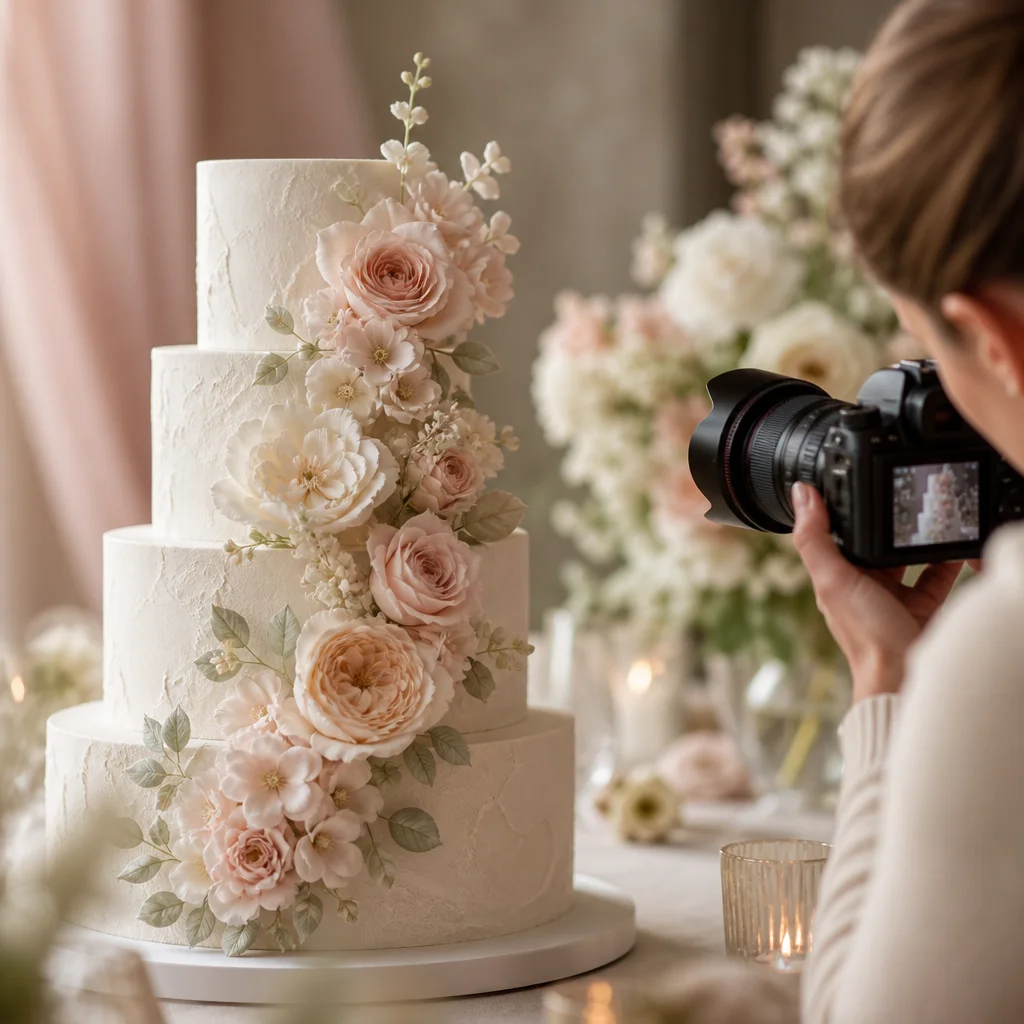
Florals and sugar work: delicate, dry textures that add visual interest without heaviness
Mixing textures across tiers keeps the eating experience interesting from the first slice to the last.
Takeaway: Choose one crumb, one creamy filling, and one crunchy accent for your cake, and make sure each tier offers at least one of these elements.
4. Choose Fillings That Complement, Not Compete
A common mistake is stacking several strong flavors that fight for attention. Raspberry, passion fruit, and espresso may each sound wonderful alone, but together they can blur. Fillings work best when they share a common note or when one stays quiet while another leads.
Here are combinations we return to often because they feel balanced and polished:
Lemon elderflower with white chocolate and fresh berries: bright, floral, and refined
Vanilla bean with raspberry and light buttercream: classic and romantic
Dark chocolate with salted caramel and toasted hazelnut: rich, grounded, and autumnal
Honey almond with apricot compote: warm, golden, and perfect for an intimate ceremony
When you're unsure, ask whether the filling highlights the cake or simply adds sweetness. Fillings should lift the sponge, not mask it.
Takeaway: Pick a maximum of two strong fillings per cake, and make sure one of them is subtle enough to support the other.
5. Use Premium Ingredients to Elevate Each Layer
The difference between a good wedding cake and an unforgettable one often lies in the ingredients. Quality butter with a clean, creamy finish, real vanilla bean, fresh citrus zest, and well-sourced chocolate all change how a flavor reads on the palate.
At our studio, flavor comes first. We build recipes around premium components so that the design never has to carry the taste on its own. Sugar florals and sculpted silhouettes are beautiful, but guests remember how the cake tasted long after they remember how it looked.
Ask about the chocolate: single-origin or high-cacao options add complexity.
Look for fresh zest and extracts: they provide clearer, brighter notes than artificial flavorings.
Consider seasonal fruit: it adds natural sweetness and better texture.
Takeaway: Invest in the ingredients that define your flavor story, especially the ones guests will taste first.
6. Consider Sweetness Levels for Your Guests
Not every guest craves the same level of sweetness. Some will love a rich, indulgent slice, while others prefer something subtle. Thinking about your guest list helps you find a balance that works for most people.
Consider the following when planning:
Age and palate: older guests may prefer less sugar, while younger guests may expect bold, sweet flavors.
Event timing: a late-afternoon reception may call for lighter options than a dessert-focused evening.
Pairing with other desserts: if you're serving a dessert table, you may want the cake to be the more restrained choice.
Balancing sweetness also helps the cake feel elegant rather than cloying. Acid from citrus, a pinch of salt in caramel, or a tart berry compote can make each bite feel clean and refreshing.
Takeaway: Ask yourself how sweet your favorite dessert is, then adjust your cake so it feels generous but never overly sugary.
7. Book a Custom Tasting With Our Studio
Reading about flavor pairings is helpful, but tasting them is where the decision becomes clear. A custom tasting lets you sample fillings, sponges, and buttercreams side by side, so you can feel how each combination works together before committing.
We recommend our Wedding Cake Tasting Boxes as a starting point. They give you a chance to explore our signature flavors and experience the craftsmanship behind every layer. For a deeper look at seasonal and signature options, you can also explore our cake flavors, including the bright, floral profiles our couples love most.
To help us prepare your custom design, please share:
Your wedding date and estimated guest count
Your venue, whether it's a seaside terrace, a garden estate, or a city loft
Inspiration photos for florals, silhouettes, and color palettes
Your favorite flavors and any you'd like to avoid
Because every celebration is personal, we design each cake specifically for your story, your guests, and your San Diego setting. The result is a cake that looks like fine art and tastes like the best moments you've shared together.
Takeaway: Reserve a tasting early, bring your inspiration and guest details, and let your palate guide the final design of your multi-tier wedding cake.
Frequently Asked Questions (FAQ)
How do you help us choose balanced flavors for a multi-tier wedding cake?
We begin with a short conversation about the flavors you already love, the season of your wedding, and the mood you want the cake to set. From there, we suggest pairings for each tier so that no single layer overwhelms the others. Every recommendation is tested in our kitchen before it reaches your tasting.
How many flavors can we sample before we decide?
We offer custom tastings where you can sample several sponge, filling, and buttercream combinations side by side. Our guidance is to narrow the field to three or four favorites, since that makes it easier to judge how each one works across the full cake. We are happy to adjust the sweetness or texture of any option after you taste it.
Do you create different flavors for each tier of the cake?
Yes, we often recommend a different flavor for each tier, provided the pairings share a common thread such as citrus, vanilla bean, or toasted nut. We keep the most delicate flavors on the upper tiers and richer, denser layers on the base, so the structure and the taste both feel balanced. Your final selection is always guided by your preferences and the number of guests you are serving.
Comments